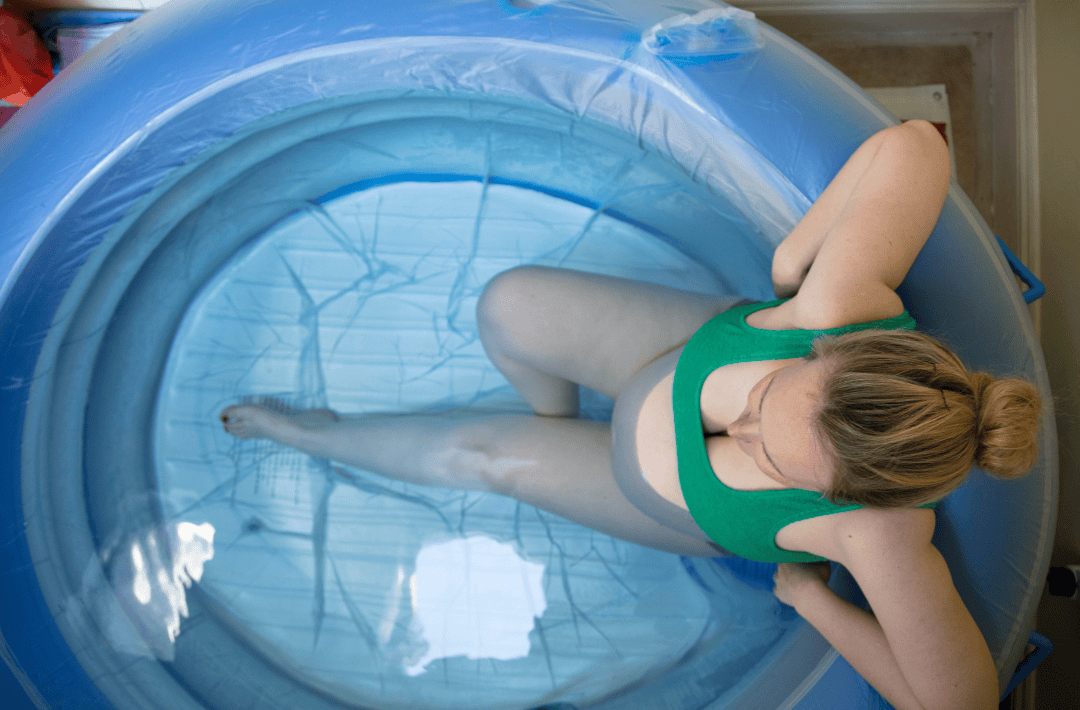
There’s something deeply instinctive about water. We need it to stay alive, and we turn to it for comfort, restoration, and calm. In fact ,Water holds deep spiritual meaning in the Christian tradition—from baptism to Jesus’ description of the Holy Spirit as “living water” (John 4:10, John 7:39). During labor, water can become a powerful tool. For instance, water eases pain, calms the nervous system, and creates a sense of privacy and peace. And now, new research reveals that using water for pain relief in labor may offer benefits that extend beyond birth itself.
Why Water? The Ancient Comfort in Modern Birth
For centuries, people have intuitively turned to water during labor. Now, I’m not talking about a water birth, where the baby emerges into a pool of water (though this can be great for those who want it). Instead, I’m talking about a more basic use of water for pain relief in labor. For example, stepping into a warm shower or sinking into a bathub. Water provides gentle support at one of life’s most intense thresholds.
Today, more families are choosing to incorporate water into their birth plans. The reason is simple: it works.

The Power of Water for Pain Relief in Labor
Water offers gentle, natural, and effective pain relief in labor.
Warm water works on multiple levels. Physically, it helps release muscle tension. It also creates a sense of weightlessness that reduces pressure on the lower back and joints. This allows for easier movement and position changes. Many people find that contractions feel significantly more manageable when they’re immersed in water.
Emotionally, water can bring a deep sense of calm. The quiet of a dimly lit bathroom or birthing space can be deeply calming. Add the soothing warmth of the tub or shower, and it becomes easier to find a rhythm in your breathing. This helps you settle more fully into your labor. For many, being in water feels like entering a private world—a space to turn inward and let the body work, free from distraction or overwhelm.
Water also supports the body’s natural coping mechanisms. It reduces adrenaline and stress hormones while encouraging the release of oxytocin. Oxytocin is the hormone that not only keeps labor progressing but also helps us feel loved, safe, and connected.
While everyone experiences labor differently, for many, water becomes their favorite tool for navigating contractions with confidence and calm.
The Latest Science: Beta-Endorphins and Breastmilk
A newly published study suggests additional benefits of laboring in water.
The study published in the Journal of Human Lactation found that laboring in water may increase the presence of beta-endorphins in breastmilk after birth. Beta-endorphins are natural, pain-relieving hormones—our body’s own version of morphine. They help us cope with stress and discomfort, and they play a key role in bonding and emotional regulation.

Beta-endorphins help soothe the newborn during those first tender days outside the womb—supporting early feeding, bonding, and overall well-being.
Hydrotherapy is correlated with a positive perception of birth and higher levels of β-endorphin in milk. Further research on the causal relationship between hydrotherapy and β-endorphin levels in milk may support its use to facilitate positive changes in mother’s milk.
Admittedly, this was a small study that didn’t control for a number of factors that may have influenced the results. Nonetheless, this research is very encouraging. The benefits of using water for pain relief in labor may extend beyond the laboring woman to the baby.
How and When to Use Water for Pain Relief in Labor
There are many ways to use water during labor. A warm shower directed at your lower back can be especially soothing in early labor or when experiencing back pain. A deep tub can provide full-body relief during active labor.

Timing matters
Getting into the water too early might slow contractions, especially in early labor. This isn’t necessarily a bad thing. Taking a warm, relaxing bath is a good “litmus test” for whether you are actually in labor or not. If you’re in labor, the contractions won’t go away. If it’s not quite time, the contractions will likely slow down or stop altogether. Then you can hopefully get some much-needed rest.
During active labor, water can offer powerful comfort without interfering with the body’s natural progress. Some midwives recommend getting out of the water after 30 to 60 minutes. They say it can help prevent labor from slowing down. Others believe there’s no need to limit your time. As long as the water feels good and labor is progressing, it’s fine to stay in.
Doula support for laboring in water
As your labor doula, I’ll help you decide when it’s the right time to get into the water. I can:
- Run your bath or prepare the tub for you
- Support you physically as you get in and out
- Offer suggestions for positions in the water
- Advocate for the use of wireless fetal monitoring. If you’re birthing in a hospital that requires continuous monitoring, this will help you stay mobile and comfortable.

These small acts of support can help you stay grounded, confident, and connected to your body.
Considerations to keep in mind
Using water in labor is generally very safe, but there are a few things to keep in mind:
- The water should be warm, not hot—ideally around 98–100°F (37–38°C)
- If you’re planning to give birth in the water, check your provider’s and facility’s policies
- Not all hospitals offer tubs or allow water immersion past a certain point, so it’s good to ask ahead
Is Water Right for You?
Water may not be right for every moment of every labor. However, it’s a gentle, effective option that supports both body and mind. If you’re curious about how water might be part of your birth story, I’d love to talk more about your preferences and hopes.
Water has long been a source of life, healing, and sacred transition. Using water for pain relief in labor is a beautiful way to meet your baby with calm, strength, and support. And now we know it may even offer benefits for your baby’s early days, too.
If you’re exploring ways to bring gentleness and confidence to your birth, water might be just the ally you’re looking for.
💧 Let’s chat about how to make it part of your plan.
Leave a Reply