*Client stories*
Alondrea called me late in her pregnancy with one big goal: she wanted a VBAC (vaginal birth after cesarean), and she wasn’t sure her provider was going to be the ally she needed to get there. He’d told her she “could try.” Not exactly a resounding yes. That one phrase set the tone for everything that came after, and it’s a big part of why avoiding an episiotomy during her VBAC ended up being just as much about finding her own voice as it was about trusting her body.
Fear of Giving Birth Again After a Difficult C-Section
Alondrea’s first birth, with her son Kyce, ended in a C-section. She knew exactly what that recovery felt like: the pain, the limitations on what she could do during those first days, and a healing timeline that kept her from even holding Kyce for his very first bath. Fear of giving birth again after a cesarean is common, and it was very real for Alondrea. So was her determination. She wanted a different outcome this time, and she wanted a team that would help her get there.
VBAC Preparation and Support in Birmingham, Alabama
We talked for a long while during that first call. I listened to her concerns, we talked through what VBAC preparation and support could actually look like for her, and I sent her a short list of questions to ask her provider—questions designed to help her tell the difference between a doctor who is truly VBAC supportive and one who is simply VBAC tolerant. There’s a real difference between the two, and it matters.
Is Your Provider VBAC Supportive, or Just VBAC Tolerant?
A provider who is VBAC tolerant will let you try as long as nothing unusual happens along the way. A provider who is VBAC supportive believes in your body’s ability to do this and works with you instead of simply waiting to see if you fail.
Alondrea used her list of questions, and a few days later she called again. She had made up her mind: she wanted doula support for this birth. Since we were starting so late in her pregnancy, we arranged payment through Affirm. This form of credit allowed her to spread the cost out rather than let finances keep her from having support.
Preparing for Birth with Confidence, One Home Visit at a Time
I met with Alondrea and her husband, Rod, twice in their home over the following weeks. We talked through her birth plan, answered their questions, and practiced positions and comfort measures together. One aspect that was very important to Alondrea was avoiding an episiotomy during her VBAC. These steps helped them prepare for birth confidently instead of walking into the hospital and simply hoping for the best.
Their toddler son, Kyce, wasn’t so sure about this arrangement. He got visibly upset whenever he saw anyone touching his mom—even his own dad—though he was perfectly happy climbing into my lap for a cuddle. Big brothers keep their own kind of watch.
Birth Doula Support in Birmingham, AL: From Contractions to the Cafeteria
At 39 weeks, her cervix was still closed. Her provider made it clear he didn’t like his VBAC patients going past their due date. That kind of pressure can make anyone feel like their body is behind schedule, even though 39 weeks is full term, not overdue.
We talked through her options before that appointment so she wouldn’t be caught off guard. Armed with this forethought, she chose to wait rather than rush into a membrane sweep so close to Christmas.
Then, on Christmas Eve, she noticed her feet swelling and checked her blood pressure herself: 143/88. This was too high for someone whose numbers usually stayed well under 120. Paired with tingling in her feet, that was enough to warrant a call to the on-call doctor rather than simply waiting it out.
She rested, elevated her legs, took an Epsom salt bath, and checked her blood pressure again a little later. Her numbers came back down, and she was able to spend Christmas at home after all.
It’s a good example of what evidence-based birth education is really for: knowing which symptoms deserve a phone call without living in fear of every ache along the way.
Labor finally began a few days later, and it looked like the VBAC was on. By the time Alondrea arrived at the hospital, she already had a strong team gathered around her: her husband, Rod, her mom, her sister, and me.
Working Through Heavy Contractions Together
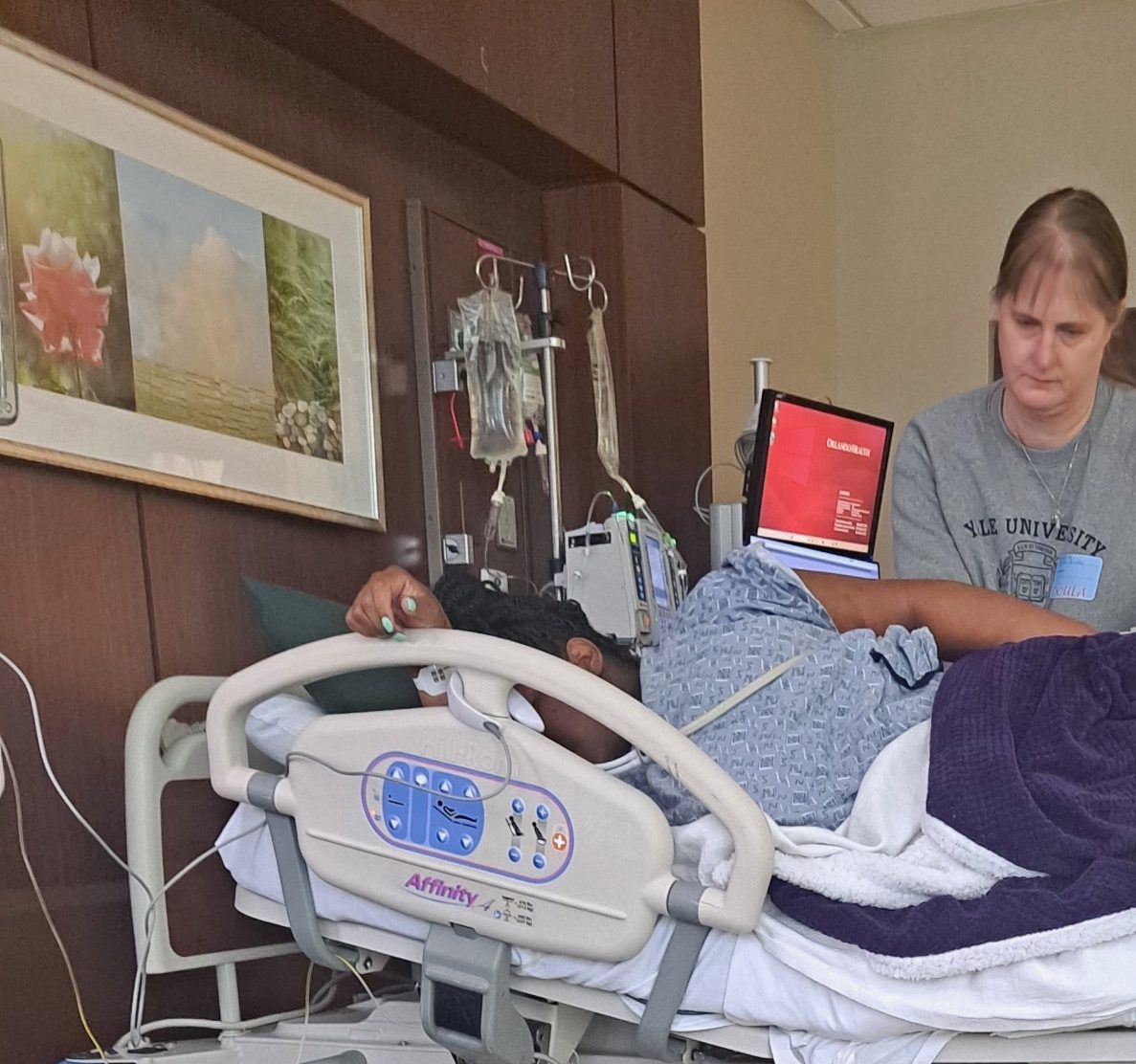
She worked through intense contractions with incredible strength, and after a while, she decided to get an epidural. Only one support person was allowed in the room while it was being placed so Rod stayed with her while I took her mom and sister down to the cafeteria for lunch. We spent that time talking about how well Alondrea was doing and how much we all hoped this would be the VBAC experience she had worked toward for months: avoiding episiotomy, and feeling proud of how her body had done exactly what it was made to do.
What to Expect During Labor When Plans Shift
The epidural helped a lot, and for a while, everything was going smoothly. We continued working through different positions together to help labor progress and encourage the baby to move down through her pelvis. Throughout it all, Rod remained by her side, encouraging her through every contraction and helping her stay focused.
This is often what labor looks like: constant small adjustments, working through one position and one contraction at a time.
The Moment That Mattered Most
When it came time to push, Alondrea asked for guidance, and at first, things looked good. There was real movement and steady descent. Then, somewhere along the way, her epidural stopped working.
When the Epidural Stops Working Mid-Push
Pushing got hard. Really hard.
By the time all was said and done, she pushed for nearly two and a half hours, and her epidural wasn’t doing much to help anymore.
“Why isn’t my epidural working?” she kept asking.
The honest answer was that sometimes it simply happens at the worst possible moment.
Through it all, her baby’s heart rate remained reassuring and steady. Alondrea was exhausted and in tremendous pain, but she was doing exactly what her body needed to do. Her husband never left her side, encouraging her through every push and reminding her how strong she was, even when she felt like giving up.
Her doctor, hoping to help move things along, began suggesting an episiotomy. He mentioned it once. Then again. Then again.
Avoiding an Episiotomy During VBAC
I knew from our conversations months earlier, sitting in their living room with Alondrea, Rod, and a toddler in my lap, that avoiding an episiotomy was something Alondrea felt strongly about. So, when the repeated mention of it started making her feel panicked on top of everything else, I checked in with her doctor to confirm there was no immediate danger to the baby.
There wasn’t.
The suggestion was about speeding up the birth, not medical necessity.
Her Body, Her Call: : Avoiding Episiotomy During VBAC, Her Way
At one point, after yet another mention of the episiotomy, Alondrea looked directly at me and asked what she should do.
I told her what I knew to be true: her baby was doing well, she was doing exactly what her body was supposed to be doing, and I remembered how strongly she had hoped to avoid an episiotomy. I also acknowledged how exhausted she was and how much pain she was in.
Then I stepped back.
The decision belonged to her.
With Rod continuing to encourage her and the rest of us supporting her every step of the way, Alondrea chose to keep going on her own.
About twenty minutes later, after one final stretch of determined pushing, her baby’s head emerged, followed by his shoulders.
No episiotomy.
(If you’d like to read more about the evidence behind avoiding episiotomies, I’ll be publishing a full post on that topic soon.)
Healing After a Traumatic First Birth, One Bath at a Time
The next day, Alondrea gave her son his very first bath—something she hadn’t been able to do with Kyce because of the recovery from her C-section.
Later, she texted me: “I wasn’t able to with Kyce because of my C-section recovery. It was so hard, but this time, I did it.”
That sentence says almost everything about what this birth meant to her.
Compassionate Postpartum Care and a Family Who Noticed

That evening, her sister sent her a photo of me holding newborn Dayton with a message
underneath:
“She was worth whatever you paid! Great asset—we could not have done it without her!”
Alondrea forwarded it to me with a message of her own:
“I couldn’t have done that without you. I appreciate you so much. You are amazing at what you do.”
Postpartum wasn’t all easy.
That first night home was especially difficult, filled with pain and the emotional hormone crash that so often catches new mothers off guard once the adrenaline of labor wears off. Sleep deprivation with a newborn is real, and Alondrea felt every bit of it.
Sitz baths brought significant relief, and by the second night, things were already beginning to improve. She was so glad she’d been able to do achieve the birth she wanted and avoid an episiotomy during her VBAC.
Breastfeeding looked different than she’d expected. She didn’t get started at the hospital, but once she arrived home, nursing went well from the very first attempt, and she was pumping soon afterward.
Rod, along with her mom and sister, stayed close through those first days, helping care for both Alondrea and baby Dayton. That support made a meaningful difference as they adjusted to life as a family of four.
🌸 Posted with permission from Alondrea. 🌸
Avoiding Episiotomy During VBAC Starts with the Right Support for Birmingham-Area Families
Alondrea’s birth is a reminder that a VBAC isn’t only about what your body can do.
It’s also about who is in the room with you.
It’s about having people who know your goals, understand your values, and help protect your ability to make informed decisions when labor becomes hard, emotions run high, and someone in a white coat keeps offering what feels like the easier path.
If you’re preparing for a VBAC in the Birmingham, Alabama, area, I’d love to help you reach your goal. Whether your priority is avoiding an episiotomy during your VBAC or something else, I will help you figure that out and be right there beside you so you also can say “I did it!”
Want to read more inspiring client stories?
- Read Nicole’s story of birth doula support through a long labor and gestational diabetes in Birmingham, Alabama
- Read Catherine’s empowered VBAC (twice!) story
- Read Annamarie’s story of doula support for single moms
- Read Ella’s first time home birth story
- Read Claire’s peaceful Cesarean birth story

Rachel Bailey is a certified labor and postpartum doula based in Birmingham, AL who combines deep research, personal birth experience, and compassionate support to guide families through pregnancy, birth, and early parenthood. Rooted in her Orthodox Christian faith and commitment to nonjudgmental care, Rachel founded Eleison Doula Services to help families feel empowered and seen. Learn more about Rachel here, and explore her birth doula support services and postpartum doula support services.


Ready to take the next step?
If you’re feeling unsure where to start or what kind of support you’ll need, this is a simple place to begin. Complete our Contact Form using the button below and we’ll text or call you back. No pressure—just a chance to talk through what would help you feel supported.
We offer a free consultation for all of our support services.
Eleison Doula Services supports families in Birmingham, AL, and nearby communities.


Leave a Reply